
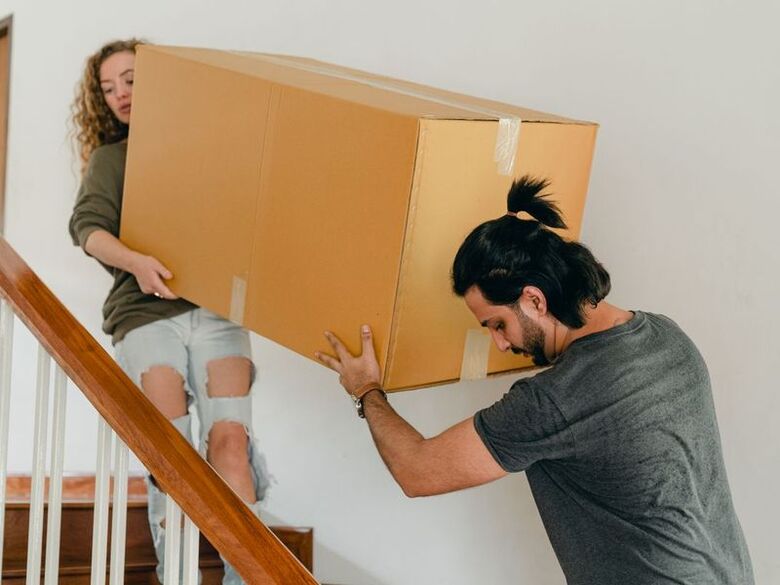
A retirement community is not a house, and moving into one does not work like moving into one. When your father owned the ranch home off Josey Lane, the truck pulled up the driveway and you carried boxes through the front door whenever you liked. An independent-living or assisted-living building in Addison or Las Colinas runs on appointments, paperwork, and a shared elevator that the whole property takes turns using. Brenda Whitfield spent twelve years as a move-in coordinator at a North Dallas community before she started this crew, which means she has stood at that front desk and watched exactly which mistakes cost families their day. This guide walks through what these buildings ask for and how our crew clears it for you.
Why a Community Move-In Has Rules a House Doesn’t
A managed building shares its hallways, lobby, and elevators among dozens of residents, so it controls who comes through and when. For a move that translates into three requirements you will not meet at a private home, and getting tripped up on any one of them is what turns a smooth afternoon into a crew standing around the lobby:
- Proof of your mover’s insurance, filed with the office before the date
- A reserved time slot on the one freight elevator everybody shares
- A defined window when move-ins are even allowed, plus a legal place to park the truck
Handle all three in advance and a community move-in is calmer than a regular house move. Leave them to the last week and you are gambling with your relocation date.
The Certificate of Insurance, Start to Finish
The piece that surprises families most is the certificate of insurance, often shortened to COI. It is a one-page document proving your moving company carries real liability and cargo protection, and most buildings around Addison, North Dallas, Carrollton, and Las Colinas will not let a crew past the lobby without one already on file. A good many go further and want the property itself listed as an additional insured party, which is extra wording that takes a day or two longer to issue correctly.
None of that slows us down, because we issue these constantly. Our company holds a Texas Department of Motor Vehicles household-goods registration, separate USDOT and MC authority for interstate jobs, and a $1M cargo policy, so drawing up a certificate for a senior building is something we do most weeks. All we need from you is the deadline the office sets and the exact language they want printed.
The Elevator and the Loading Spot
If the certificate is the gatekeeper, the elevator is the actual chokepoint of the day. Almost every building lets a resident book the freight car for a block of time and asks maintenance to hang pads inside it. A handful of details matter here:
- Get the reservation confirmed in writing. Without a held slot, your crew lines up behind a grocery delivery and the lunch carts, and that wait is time you funded.
- Nail down where the truck parks. Some buildings have a real loading dock; others point you to a marked curb with a time limit. We order the carry around whichever it is so nothing parks where it should not.
- Ask for the elevator’s inside measurements. A tall wardrobe or a long sofa that does not fit the car has to go up the stairwell, and that changes how many movers we bring and how long the job takes.

One Phone Call Saves the Day
Before you settle on a date, get the building’s move-in coordinator on the phone and run through this short list. Asked once, in advance, it heads off nearly everything that could otherwise go wrong on the day:
| What to Ask | Why It Matters |
|---|---|
| Insurance certificate rules and deadline | The crew won’t be let in until it is on file |
| Whether they want additional-insured wording | Many properties require their own name printed on it |
| How to book the elevator and for how long | One shared car; an unbooked slot means a queue |
| The allowed move-in window and truck parking | Decides when you can move and where the truck sits |
| Inside measurements of the freight car | Shows which pieces ride up and which take the stairs |
| Which days and hours move-ins are permitted | Some buildings restrict moves to weekday business hours |
| Any move-in fee or refundable deposit | Worth budgeting before the date arrives |
| Fobs, gate codes, or dock keys you’ll need | Lets the crew and truck actually get inside |
I worked that front desk for twelve years, and I lost count of the moves that fell apart because a crew turned up with no certificate or no elevator booking. The family stood there watching the clock, paying for it, and there was nothing I could do. I built this company so that never happens to one of mine. We file the paperwork in the wording the building wants, we hold the car, and your mother’s apartment is settled before supper. — Brenda Whitfield, owner
How Our Crew Handles Move-In Day
A community sets a clock a private home never does: a two-hour window, an elevator that goes back to residents at a fixed time, a service drive that has to stay clear when meals are served. We plan the whole day around it. The bulkiest furniture goes up first while our elevator block is held, one mover keeps the fob the entire time, and we watch the end-time so nobody is rushing your father’s belongings as it closes. Because we have done this in most of the buildings across Addison, North Dallas, and Carrollton, the rhythm is familiar before we ever arrive.
A Quick Checklist for the Day
- Insurance certificate on file, worded just as the building asks, confirmation in hand
- Elevator block reserved in writing, pads requested from maintenance
- Truck parking and the legal sit-time settled
- Biggest furniture measured against the elevator and the apartment doors
- Permitted days and the end-time confirmed; fobs, codes, and keys tested ahead
- Boxes labeled by room so the new apartment comes together inside the window
Settling a parent into senior living is a tender day as much as a logistical one, and getting the building’s requirements out of the way ahead of time is what frees everyone to focus on the part that matters. Our patient W-2 crews do this work week in and week out, and we never subcontract a single job. You can read more about the senior specialty on the senior moving page, see how we box a whole home on the full packing page, and check which communities we reach on the service areas page. Senior Moving Company is a licensed, insured Texas mover with its own trucks and crews, founded by Brenda in 2013.
Frequently Asked Questions
Will you provide the insurance certificate my parent’s community requires?
Yes, routinely, for buildings throughout Addison, North Dallas, Carrollton, and Las Colinas. Pass us the requirements roughly seven to ten days ahead, and we issue the certificate worded the way they specify, listing the property where required, at no charge to you.
What if the truck can’t park at the front entrance?
That is common, since many buildings keep the main door clear. We scout the loading area first, use whatever spot the office assigns, and fold any longer carry into the quote so there is nothing unexpected at the end.
Who books the elevator and the loading window?
The resident reserves them under their own name through the building office. Once we see the inventory, we advise how long to hold the car and then run the unload to release it on time, without paying for idle minutes.
Are you a moving company or a service that finds one for me?
We are the moving company. Our own employees, our own trucks, our own TxDMV registration. The people who load your parent’s home are the people who carry it into the new apartment, with no handoff to anyone else.
Can you finish within a tight move-in window?
Yes. We size the crew to the access and the reserved elevator time, label boxes by room, and sequence the load so the bulkiest items go up first, which clears the truck inside the window with no wasted time on your bill.
Moving a Parent Into Senior Living? We’ll Handle the Building.
Tell us the community and a target date. We will put a clear flat figure in writing and lay out a simple plan for the certificate, the elevator, and the truck, so the day stays calm.